Passport Photo Examples: Accepted vs. Rejected Specimens
Side-by-side visual examples showing mandatory government biometric acceptance criteria and the most frequent causes of passport and visa rejection.
Even Illumination vs Harsh Facial Shadows
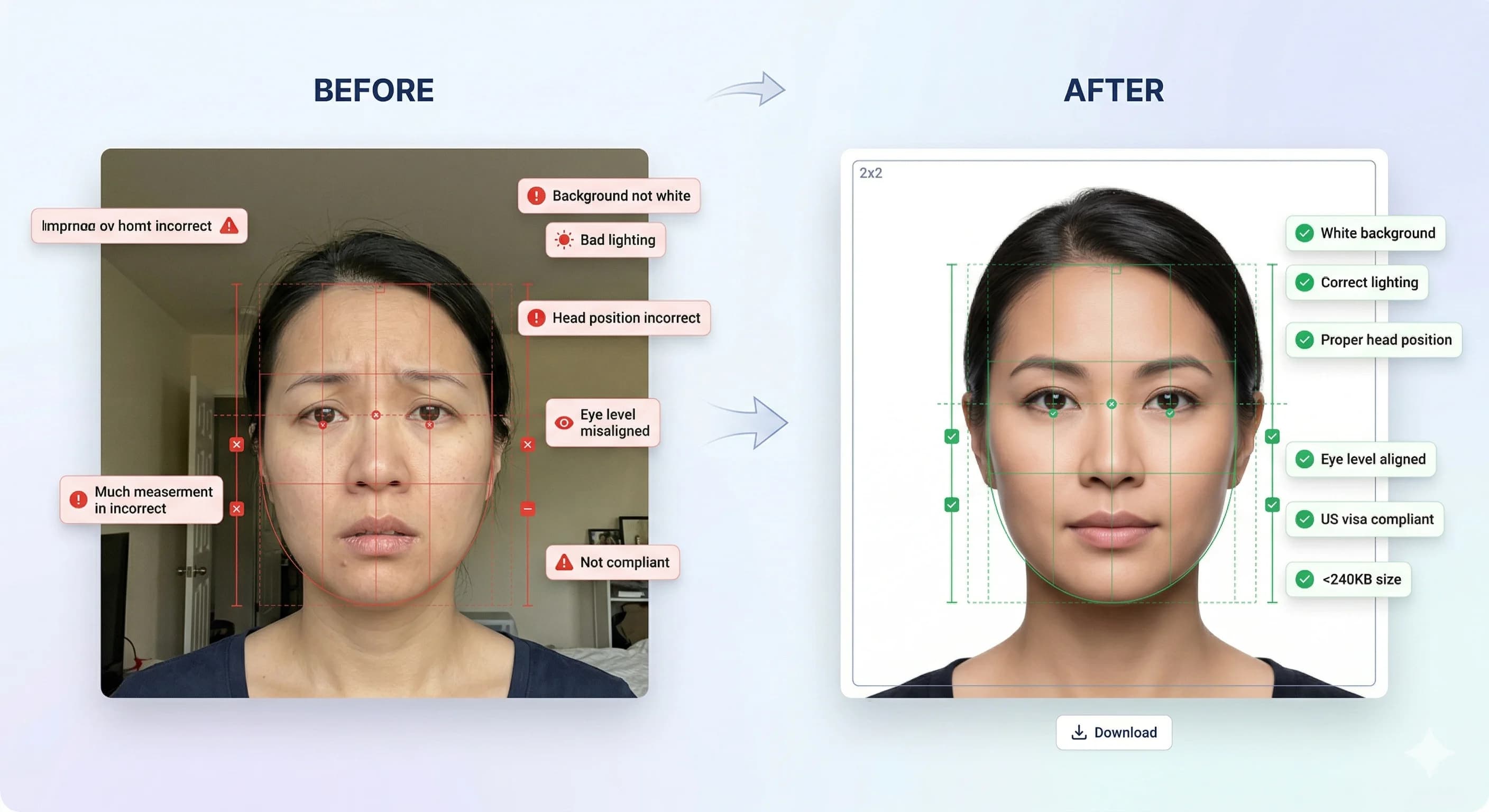
The face and background must be evenly lit with no shadows behind the head or on the facial features.
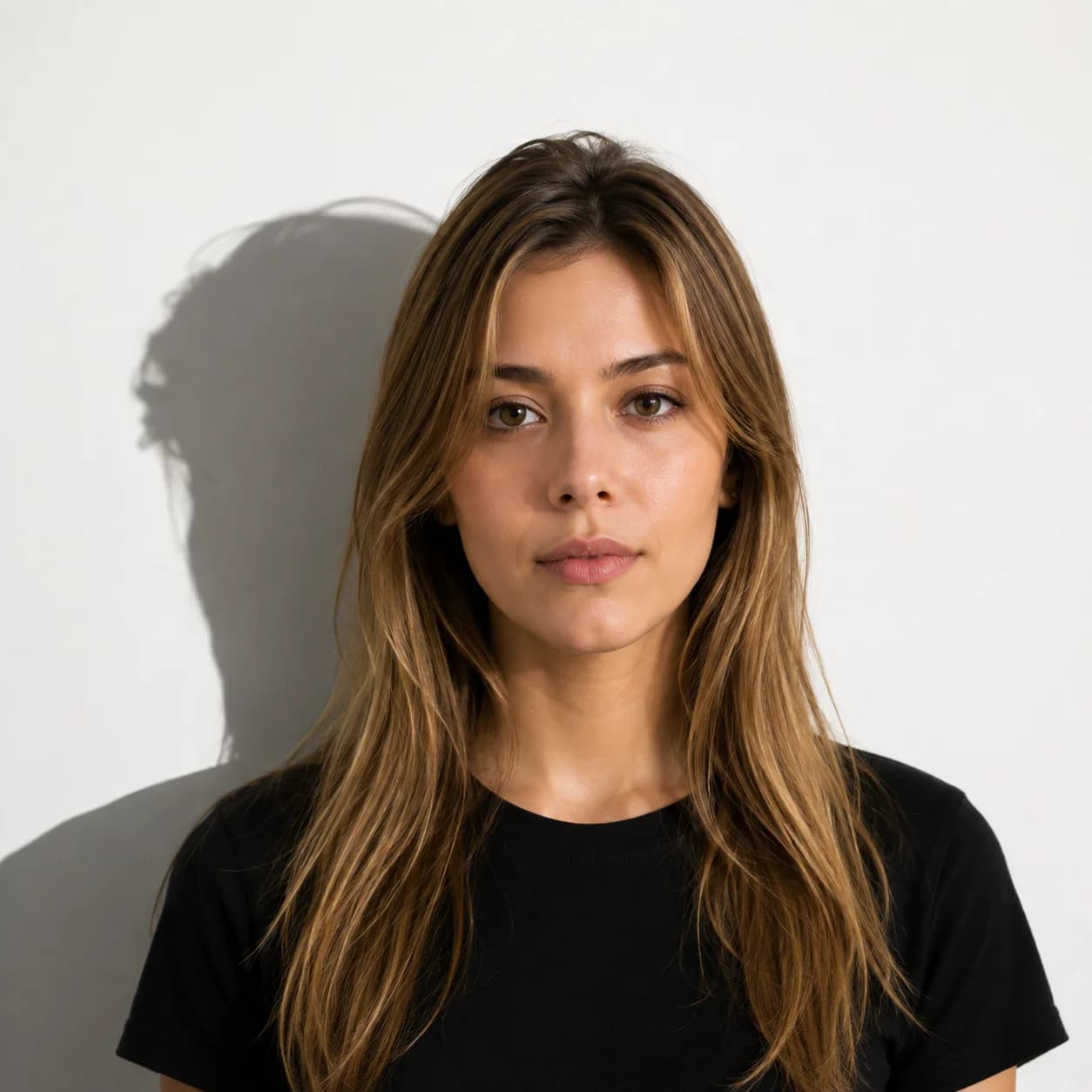
Heavy shadow cast under the chin and across the right cheek creates uneven luminance that fails facial recognition contrast algorithms.
50-69% Head Height vs Over-Zoomed Crop
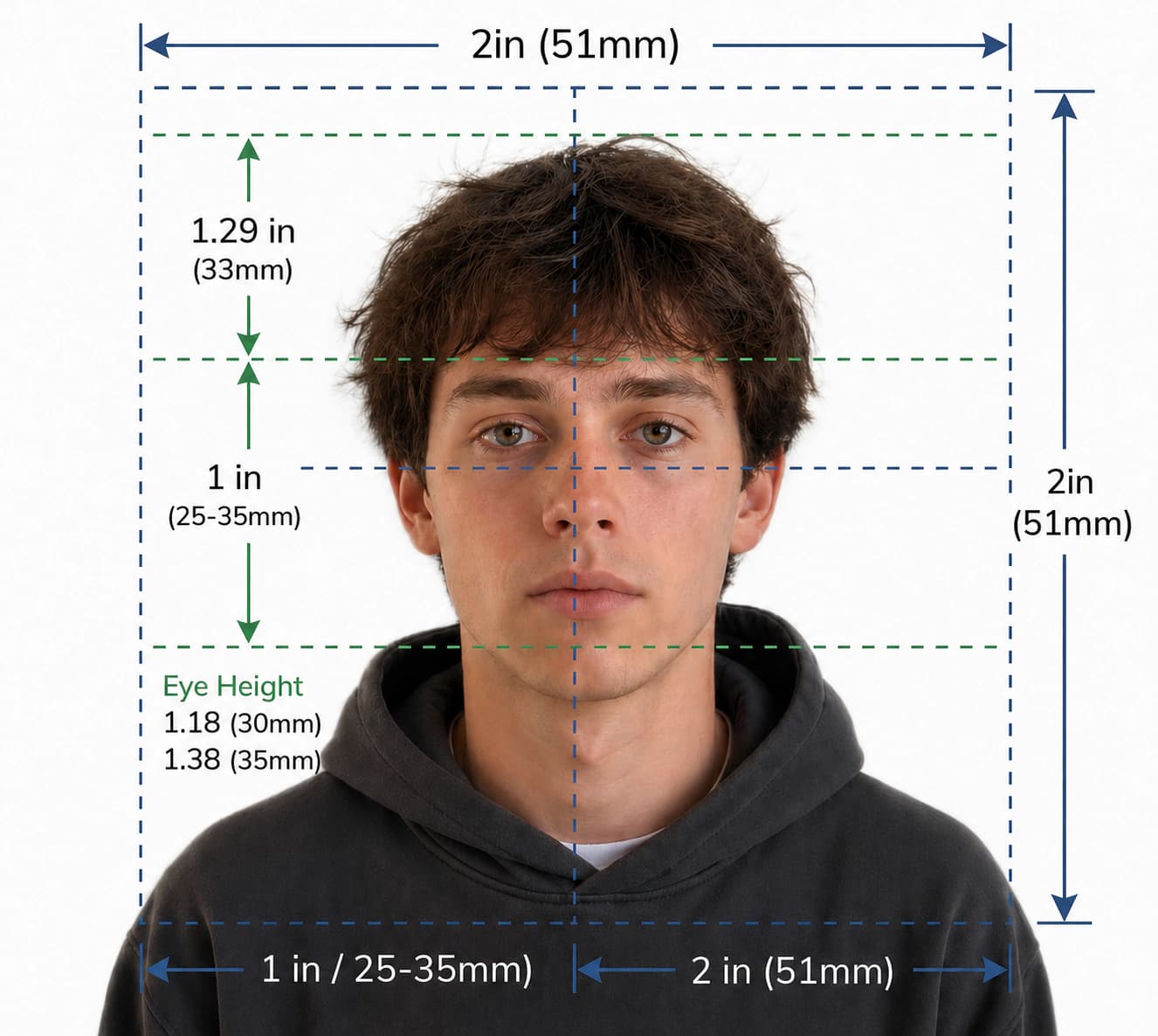
The head must measure strictly between 50% and 69% of the total image height (1 to 1 3/8 inches in a 2x2" photo).
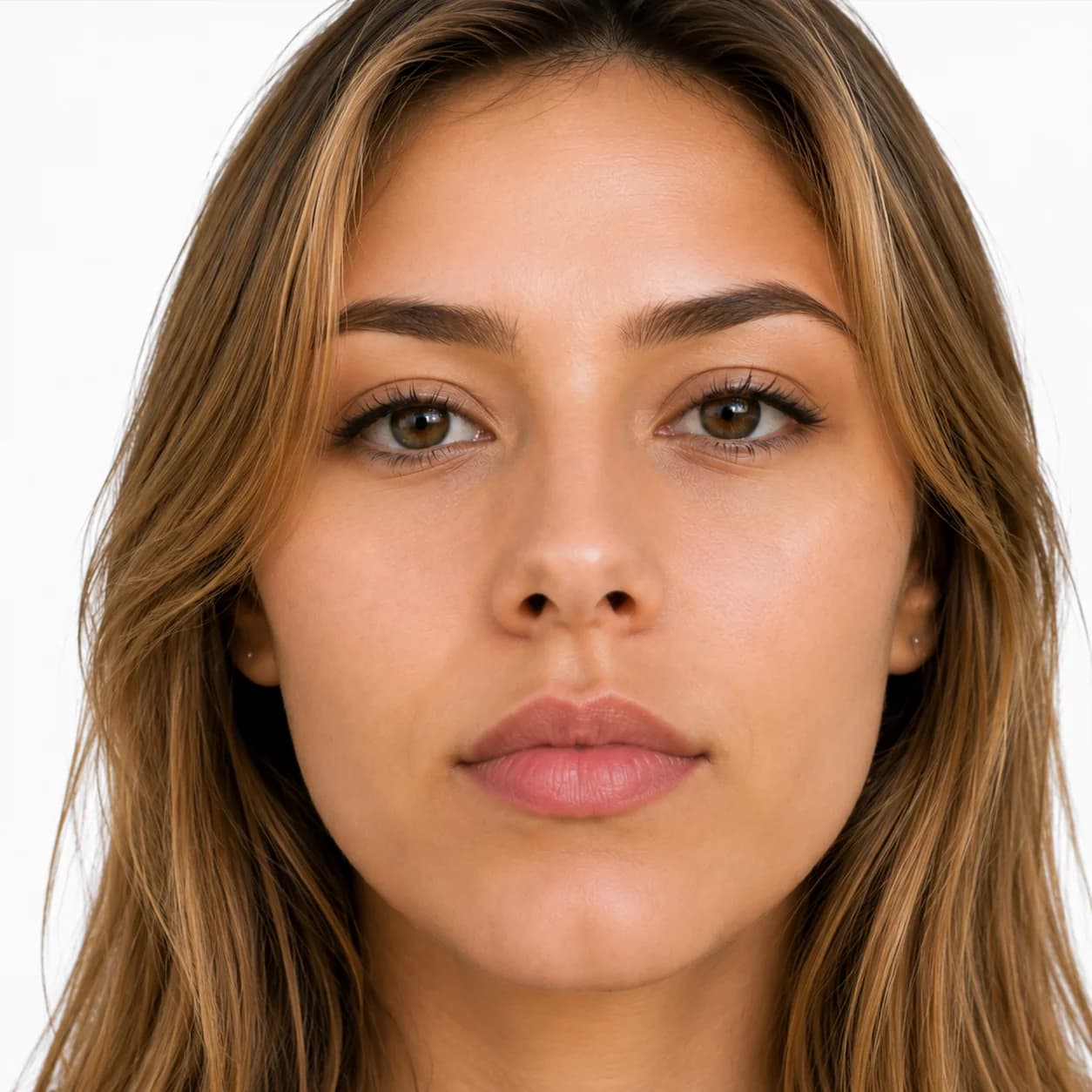
Head takes up 85% of total photo height, cutting off the natural crown of hair and chin boundary.
Glasses Removed vs Lens Glare & Frame Obstruction

Eyeglasses are 100% banned in US passport and visa photos since 2016. Medical exceptions require a doctor-signed note.

Frames obstruct the iris and eye corners; glare creates white hot-spots.
Neutral Expression vs Exaggerated Smile / Teeth

Keep a relaxed, natural facial expression with mouth closed and eyes looking directly into the lens.

Showing teeth or grimacing distorts mouth geometry and distance to cheekbones.
Pure White Background vs Textured / Off-Color Wall

Background must be plain, uniform white (#FFFFFF) with zero patterns, doors, or furniture.
Off-white wall or domestic background texture triggers automated background uniformity rejection.
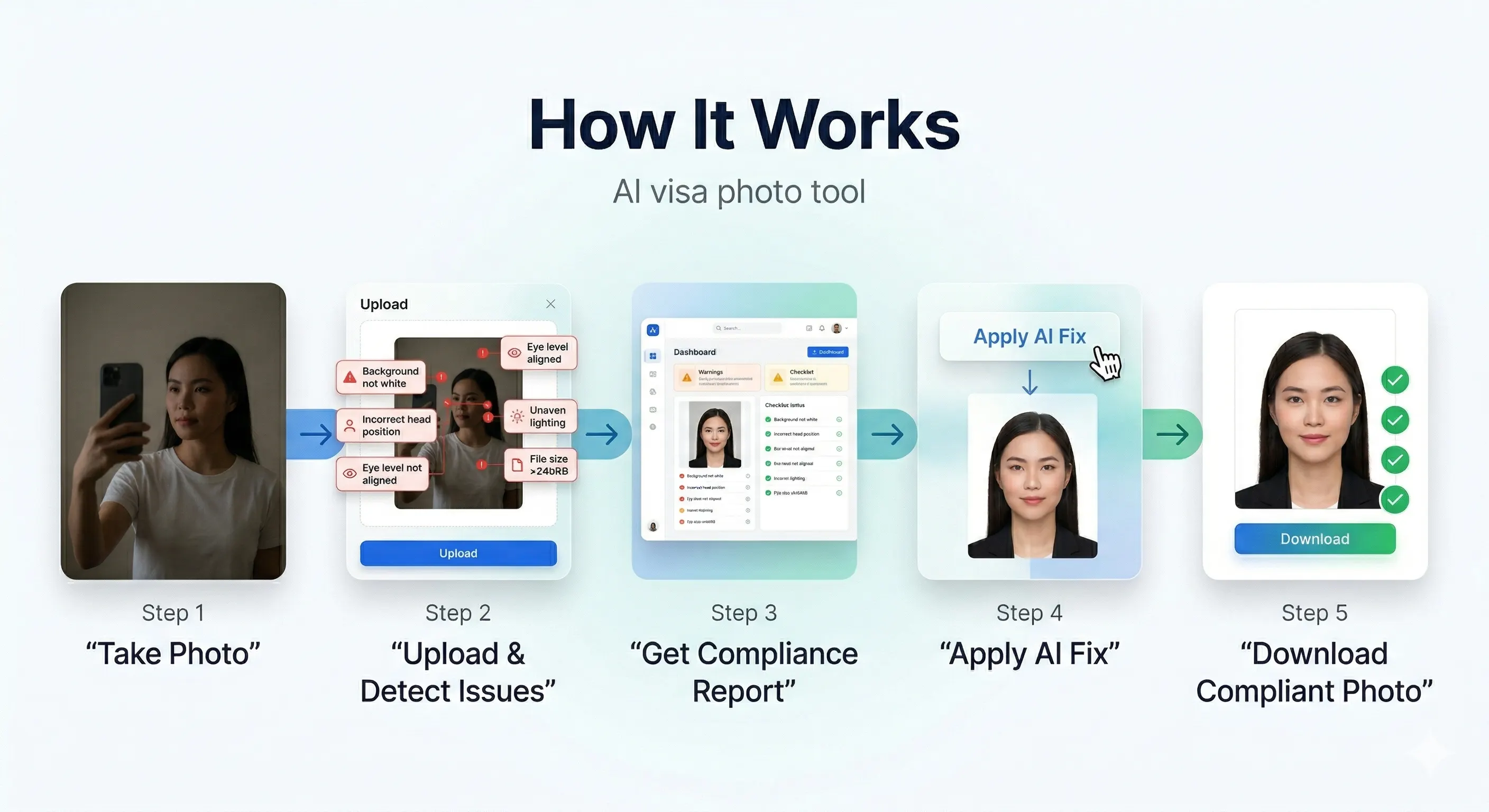
Diagnose and Fix Rejection Codes Instantly
Paste your consular rejection letter or upload the failed photo to identify the exact biometric breach and generate a guaranteed compliant replacement.
Frequently Asked Questions (Photo Specimens & Errors)
What is the most common reason passport photos get rejected?
The top 3 rejection reasons are: (1) uneven lighting and shadows on the face or background, (2) incorrect head dimensions (too zoomed in or out), and (3) wearing eyeglasses or heavy hair obscuring the eyebrows and ears.
Can you smile in a passport photo?
Most countries (including the US, UK, Canada, Australia, and Schengen zone) require a neutral facial expression with both eyes open and mouth closed. A subtle, natural closed-mouth expression is permissible in the US, but smiling with visible teeth or squinting eyes leads to rejection.
Can I wear makeup or jewelry in a passport photo?
Everyday, natural makeup is acceptable as long as it does not obscure your natural skin tone or alter facial contours. Small stud earrings and subtle necklaces are generally allowed, provided they do not reflect light into the lens or obscure the jawline.
Are digital background removal tools legal for passport photos?
Yes, provided the tool creates a smooth, continuous solid white (#FFFFFF) or light-grey background without halo artifacts around the hair or altering the subject’s face contour. PhotoResizer.us uses sub-pixel biometric alpha matting that preserves fine hair strands while meeting Department of State specs.